WANT TO SAVE THIS RECIPE?
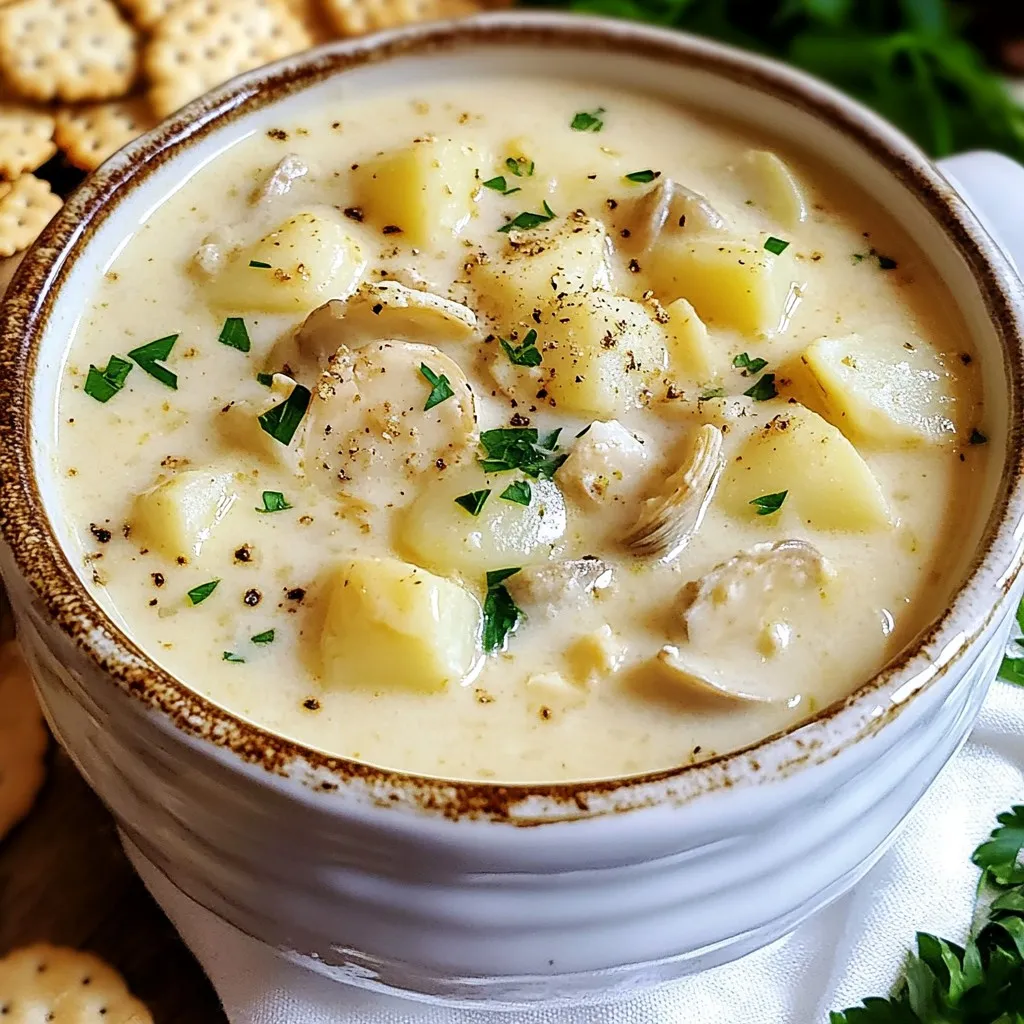
Are you ready to dive into a warm bowl of New England Clam Chowder? This hearty and simple recipe brings the taste of the coast right to your kitchen. With rich flavors from clams and tender vegetables, each spoonful is a comfort. Whether you want to stick to the classic or explore variations, I’ve got you covered. Let’s get started on making your new favorite chowder!
Why I Love This Recipe
- Comforting Flavor: This chowder is a warm hug in a bowl, perfect for chilly days.
- Quick and Easy: With a total time of just 40 minutes, you can have a delicious meal ready in no time.
- Rich and Creamy Texture: The heavy cream and roux create a luxurious base that’s simply irresistible.
- Customizable: You can easily adjust the ingredients to suit your taste, whether adding more clams or extra vegetables.
Ingredients
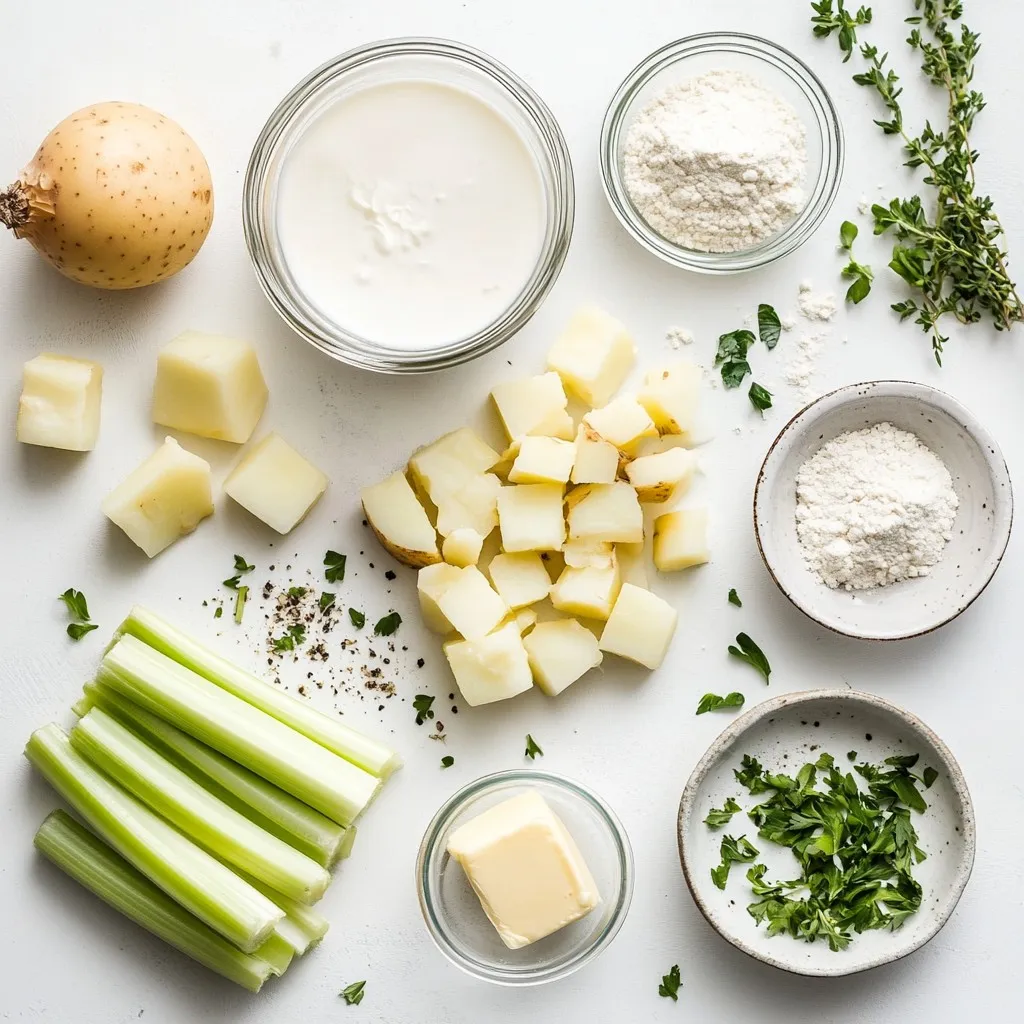
Main Ingredients for Clam Chowder
– 4 strips bacon, diced (optional for extra flavor)
– 1 medium onion, chopped
– 2 celery stalks, diced
– 2 medium potatoes, peeled and diced
– 3 cups clam juice
– 1 can (10 oz) diced clams, drained (reserve juice)
– 1 cup heavy cream
– 2 tablespoons all-purpose flour
– 2 tablespoons butter
– 1 teaspoon dried thyme
– Salt and pepper to taste
– Fresh parsley, chopped (for garnish)
The main ingredients in clam chowder create a rich and creamy dish. The clams provide that ocean flavor, while the clam juice adds depth. Onions and celery bring freshness and texture. Potatoes make the chowder hearty. Thyme gives it a warm aroma.
Optional Ingredients
– Bacon and its role in flavor enhancement
– Replacement options for cream (e.g., alternatives for a lighter chowder)
Bacon adds a savory touch. It brings a nice crunch and a smoky flavor. If you want a lighter chowder, you can skip the cream. You can use milk or a plant-based cream instead. These options keep the chowder tasty but less heavy.
Substitutions for Dietary Needs
– Gluten-free flour alternatives
– Dairy-free options for cream
If you need a gluten-free chowder, use rice flour or almond flour. Both work well to thicken the soup. For a dairy-free version, try coconut milk or cashew cream. These options will keep your chowder creamy without dairy.
Step-by-Step Instructions
Preparing the Base
1. If you use bacon, cook it in a large pot over medium heat. Wait until it is crispy.
2. Remove the bacon and set it aside. Keep the drippings in the pot.
3. Add butter to the drippings. Let it melt, then add the chopped onion and celery.
4. Sauté the onion and celery for about five minutes. Wait until the onions turn translucent.
5. Sprinkle flour over the sautéed veggies. Stir it for two minutes to make a roux.
Cooking the Chowder
1. Gradually add clam juice to the pot while stirring. Bring it to a boil.
2. When the mixture boils, add the diced potatoes and thyme.
3. Reduce the heat to a simmer. Cook for about 15 minutes or until the potatoes are tender.
4. Stir in the reserved clam juice and diced clams. Add heavy cream and heat for five more minutes.
Finishing Touches
1. Taste the chowder and adjust the salt and pepper as needed.
2. Let the chowder sit for a few minutes to thicken.
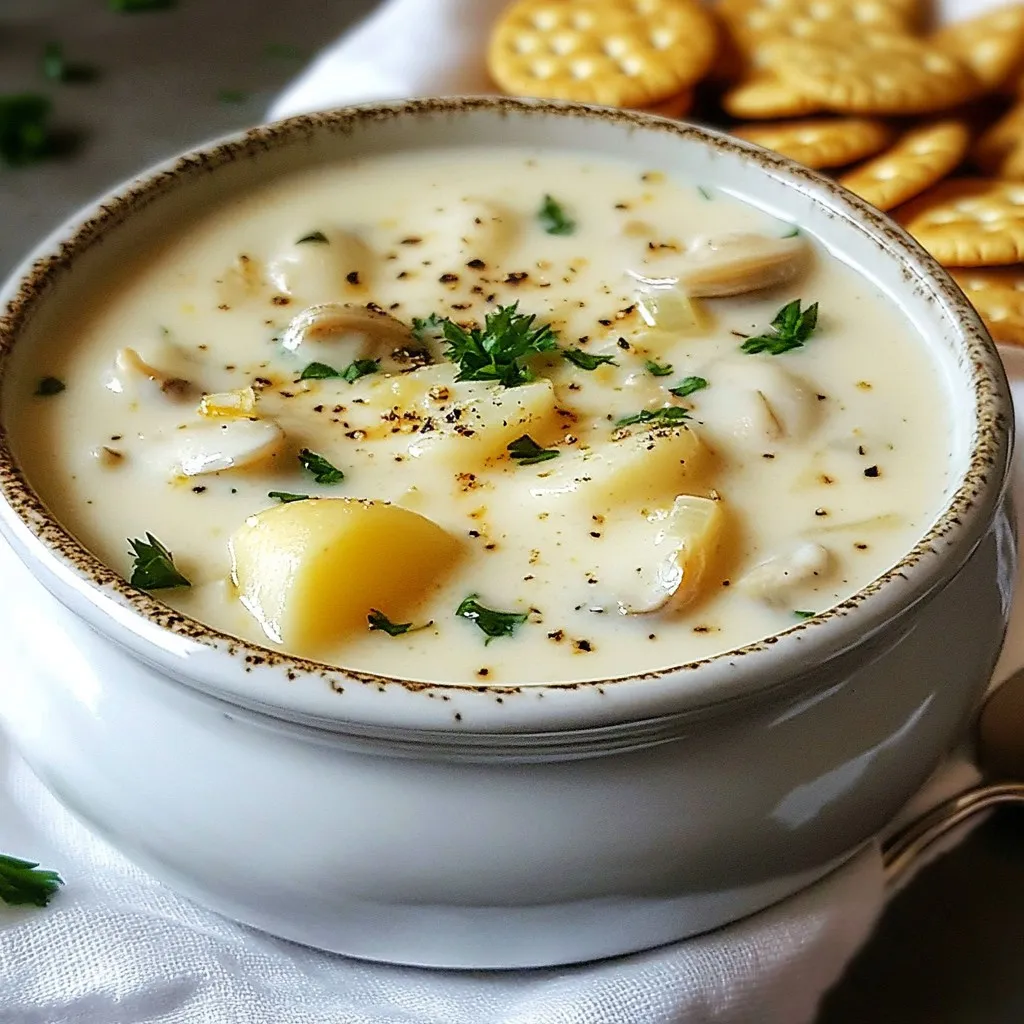
3. For serving, use warm bowls. Garnish with fresh parsley and black pepper.
4. Add oyster crackers or soft bread on the side for a rustic touch.
Tips & Tricks
Enhancing Flavor
Bacon drippings add depth to your chowder. The fat carries flavor and richness. If you skip the bacon, use butter. You can always adjust the seasonings too. Taste as you cook. You might prefer more salt or pepper. Fresh herbs can also brighten the dish.
Achieving the Perfect Consistency
To thicken chowder naturally, let it simmer longer. The potatoes break down and create a creamy base. You can mash a few potatoes with a fork for extra thickness. To avoid lumps, stir the flour in slowly. Mix it well with the vegetables before adding liquid. This creates a smooth texture.
Cooking Tips
Prepare clams by rinsing them well. If using fresh clams, steam them open and add them last. Timing is key when cooking. Add potatoes early to ensure they cook through. Stir in the clams and cream at the end. This keeps everything tender and juicy.
Pro Tips
- Use Fresh Clams: For an authentic flavor, consider using fresh clams instead of canned. They will enhance the chowder’s taste and texture.
- Adjust Creaminess: If you prefer a lighter chowder, you can substitute half-and-half for some of the heavy cream without sacrificing too much richness.
- Let It Rest: Allowing the chowder to sit for a few minutes after cooking helps it thicken and meld the flavors together beautifully.
- Garnish Creatively: Elevate presentation by garnishing with crispy bacon bits, a drizzle of olive oil, or a sprinkle of smoked paprika for added depth.
Variations
Gluten-Free New England Clam Chowder
To make clam chowder gluten-free, you can use alternatives like rice flour or cornstarch. These options help keep the texture creamy without gluten. When cooking, always check for cross-contamination. Use clean pots and utensils to avoid gluten from other foods. This is key for those with gluten allergies.
Vegan New England Clam Chowder
For a vegan version, consider using jackfruit or artichokes as clam substitutes. These plant-based options mimic the texture of clams well. For cream, coconut milk works great. It adds a rich, creamy taste without dairy. You can also use cashew cream for a nutty flavor. Both options keep the chowder rich and satisfying.
Low-Calorie Options
If you want to lower calories, try using skim milk instead of heavy cream. This change cuts fat but keeps a nice taste. You can also reduce the amount of bacon or leave it out entirely. Adjusting portion sizes helps too. Serve smaller bowls if you want to enjoy this dish while watching your calorie intake.
Storage Info
How to Store Leftover Chowder
To keep your chowder fresh, use airtight containers. Glass or plastic containers work well. If you want to freeze it, make sure to leave space at the top. The chowder will expand as it freezes. Refrigeration is best for short-term storage. Store it in the fridge for up to three days. For long-term, freezing is the way to go.
Reheating Tips
When reheating chowder, use a pot on low heat. Stir it often to avoid burning. You can also use a microwave. If you do, heat it in short bursts. Add a splash of cream or clam juice to keep it creamy. This helps maintain the texture and flavor. Avoid boiling the chowder again, as this can change its taste.
Shelf Life of Clam Chowder
Homemade clam chowder lasts about three days in the fridge. If frozen, it can last up to three months. Always check for signs of spoilage. If it smells off or has strange colors, toss it. It’s better to be safe than sorry!
FAQs
What is the Difference Between New England Clam Chowder and Manhattan Clam Chowder?
New England Clam Chowder is creamy and rich. It uses milk or cream as a base. Manhattan Clam Chowder is broth-based and has tomatoes. The main ingredients vary too. New England chowder often has potatoes, while Manhattan uses more vegetables. New England is popular in the Northeast, while Manhattan is loved in New York. Each has its fans, but they are quite different.
Can I Use Fresh Clams Instead of Canned?
Yes, you can use fresh clams! Some great types are littleneck or cherrystone clams. To prepare fresh clams, soak them in water. This helps remove any sand. Steam them until they open, then extract the meat. You can chop them and add them to your chowder. Just be sure to reserve the clam juice for extra flavor.
Is Homemade Chowder Better Than Store-Bought?
Homemade chowder is often much better than store-bought. It tastes fresher and has more flavor. You control the ingredients, so you can adjust to your taste. Store-bought chowder can have preservatives and less fresh seafood. Making it from scratch is fun and rewarding. Plus, you can share it with family and friends.
After exploring clam chowder’s ingredients, preparation steps, and variations, you now have the tools to create your own delicious chowder. Remember to adjust flavors to your taste and try different ingredient swaps based on your needs. Homemade clam chowder often tastes better than store-bought, thanks to fresh ingredients and personal touch. Whether you go gluten-free or vegan, enjoy experimenting in the kitchen. Your chowder can be unique, tasty, and satisfying. Happy cookin
Creamy New England Clam Chowder
A rich and creamy chowder featuring clams, potatoes, and a hint of bacon.
Course Main Course
Cuisine New England
Servings 6
Calories 300 kcal
- 4 strips bacon, diced (optional for extra flavor)
- 1 medium onion, chopped
- 2 stalks celery, diced
- 2 medium potatoes, peeled and diced
- 3 cups clam juice
- 1 can (10 oz) diced clams, drained (reserve juice)
- 1 cup heavy cream
- 2 tablespoons all-purpose flour
- 2 tablespoons butter
- 1 teaspoon dried thyme
- to taste salt and pepper
- for garnish fresh parsley, chopped
In a large pot, cook the bacon over medium heat until crispy (if using). Remove the bacon and set it aside, leaving the drippings in the pot.
Add butter to the pot with the bacon drippings. Once melted, add the chopped onion and celery. Sauté for about 5 minutes, until the onions are translucent.
Sprinkle the flour over the sautéed vegetables, stirring constantly for about 2 minutes to create a roux.
Gradually add the clam juice and bring the mixture to a boil, stirring to avoid lumps.
Once boiling, add the diced potatoes and thyme. Reduce to a simmer and cook for approximately 15 minutes or until the potatoes are tender.
Stir in the reserved clam juice, diced clams, and heavy cream. Allow it to heat through for another 5 minutes. Season with salt and pepper to taste.
If using, add the crisped bacon back into the chowder and stir well.
Remove from heat and let sit for a few minutes to thicken up.
Serve in warm bowls, garnished with fresh parsley and black pepper. Pair with oyster crackers or soft bread.
Keyword clam chowder, seafood, soup
WANT TO SAVE THIS RECIPE?